
Norway by Motorcycle: Inside the Blue Strada Norwegian Fjords Tour
Ten nights. Seven touring days. Trollstigen, Sognefjellet, the Lysevegen, Bergen, and Stavanger — 1,700 km of the finest motorcycle roads in Europe, from Oslo and back.
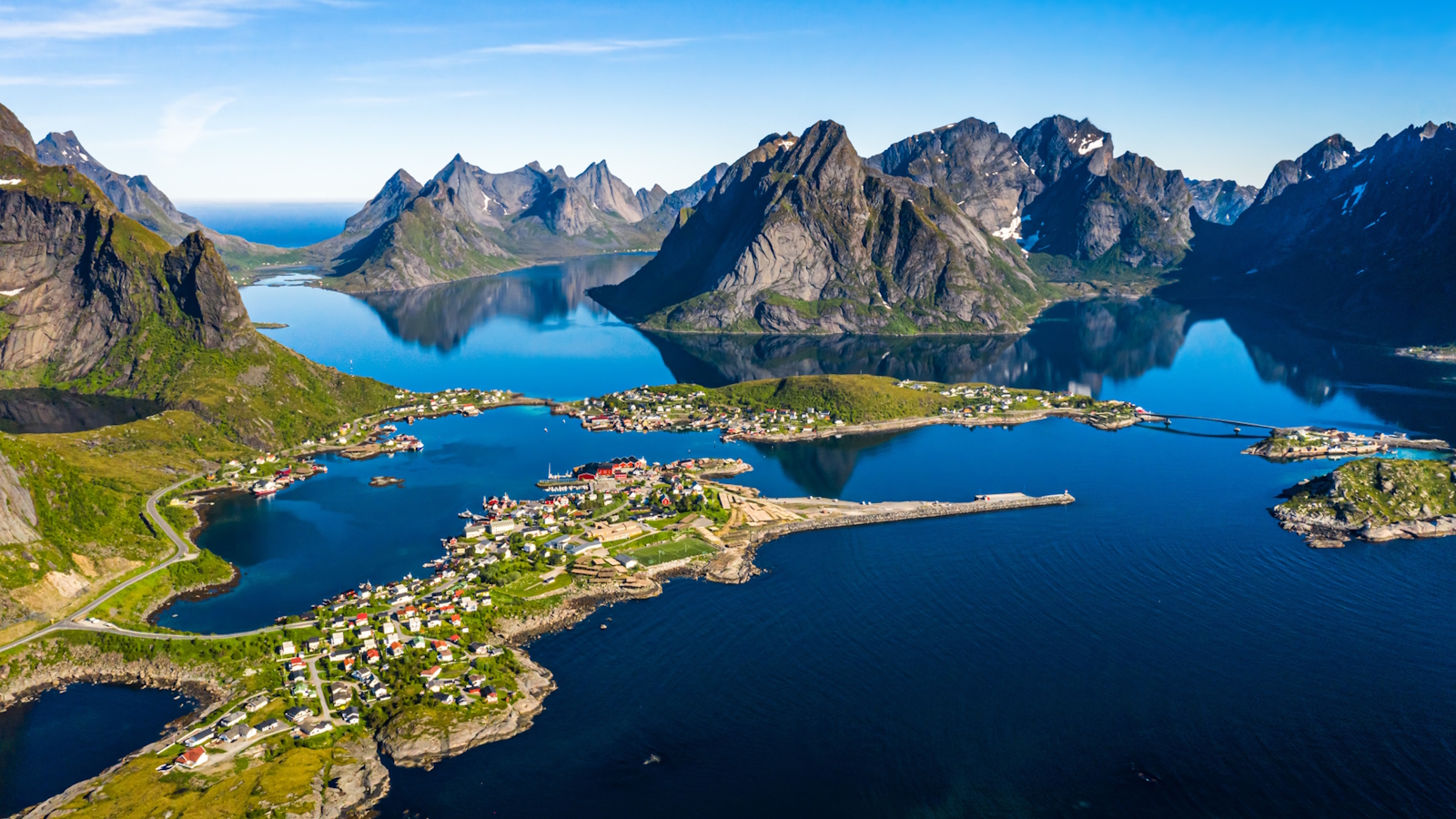
Blue Strada’s Norwegian Fjords tour was built around a simple premise: Norway has some of the most dramatic motorcycle roads in the world, and almost no guided tour operator treats them seriously. Most Norway motorcycle tours use the fjords as scenery — backdrop for a package that could have been assembled anywhere. The Norwegian Fjords tour is built around the roads themselves. The fjords are not incidental. Neither are the passes. The route crosses Trollstigen, climbs Sognefjellet, descends to the Stegastein viewpoint above Aurlandsfjord, island-hops across the western coast, and finishes on the Lysevegen — 27 hairpins up a 900-meter rock face from the Lysefjord floor. If you came to ride, the route doesn’t hold anything back.
What follows is a detailed look at how the tour actually works — the daily structure, the roads, the two rest days, and what it means to ride this route with Blue Strada rather than on your own.
Oslo to Trollstigen — The First Three Days
The tour starts in Oslo with a welcome dinner on Day 0 — the format Blue Strada uses across all its guided tours: meet the other riders, meet the tour leader, understand the format before the first day on the road. Day 1 rides south from Oslo to Lillehammer, site of the 1994 Winter Olympics, before continuing north toward Dombås. The road out of Lillehammer begins to suggest what the rest of the tour will look like: long valley roads with mountains rising on both sides, little traffic, and a riding pace that feels genuinely unhurried in a way that European routes — tighter, denser, with more competing traffic — don’t often allow.
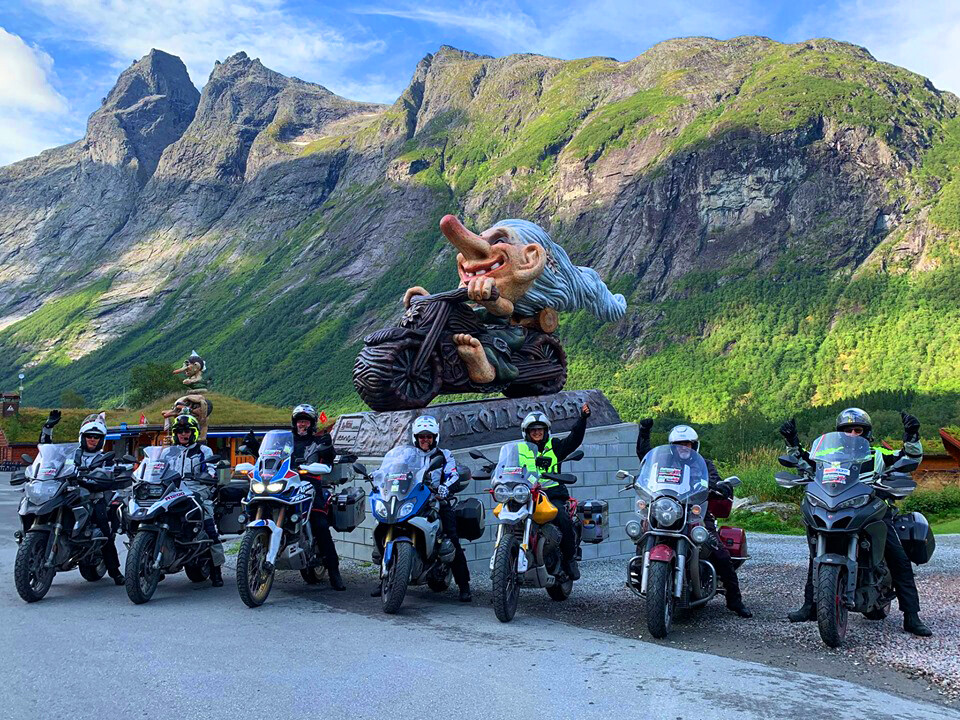
Day 2 is the first major road day. The route crosses coastal roads to Åndalsnes on the Romsdalsfjord, then climbs Trollstigen. Riders who know the Stelvio will find the structure familiar — a famous hairpin climb, a waterfall running alongside the road, numbered corners, and a reputation that precedes it. The difference is character: the Stelvio is long and exposed, with open Alpine sightlines; Trollstigen is tight, enclosed, and damp, with cliff faces close on both sides and waterfall spray across the tarmac. Same logic, different scale, different atmosphere. The group arrives from the south, which means the ascent starts at the valley floor with the full profile of the eleven hairpins and the Stigfossen waterfall visible overhead. It is the right way to arrive at a road that is famous enough to have expectations attached to it. The northern descent to Åndalsnes offers a different perspective — the Rauma valley opening below, the fjord appearing at the end of the valley, and the feeling of a road that is still being ridden rather than already finished. Overnight in Nordberg.
Day 3 covers the Sognefjellet pass — Northern Europe’s highest mountain road at 1,434 meters — followed by the descent to the Stegastein viewpoint above the Aurlandsfjord. The Sognefjellet is a sustained pass crossing: 50 kilometers above the treeline, a plateau landscape that feels arctic in character even in July, and a western descent that reveals the Sognefjord in stages as the road winds down from the summit. The Stegastein viewpoint, at the end of the descent, looks out over 650 meters of vertical drop to the fjord below. The overnight is in Flåm, at the innermost point of the Aurlandsfjord — one of the best overnight stops on the route for the fjord access and the contrast it provides after two days at altitude.
Bergen — Day 4 and Rest Day
Day 4 follows the Hardangerfjord south toward Bergen. The Hardangerfjord road is not a pass road; it is a fjord road — long, winding, and defined by the relationship between the tarmac and the water rather than the relationship between the tarmac and the sky. The Hardanger region is known for its orchards, and the road passes through fruit farms alongside the fjord in a landscape that feels entirely unlike the high passes of the previous two days. The variety is intentional. A week of unrelenting mountain riding would be impressive and exhausting in equal measure. The Hardangerfjord day resets the pace before the second half of the tour.
Day 5 is the first rest day, in Bergen. Bergen is the right city for a rest day: compact, walkable, with the UNESCO-listed Bryggen wharf alongside the harbor, a fish market, and the funicular to the Fløyen viewpoint over the city and the fjords beyond. For riders who want a road rather than a rest, Bergen sits at the edge of the fjord network and there are day rides in every direction. For everyone else, Bergen at a walking pace, over a full day without a departure time, is the kind of day that makes the second half of the tour feel like a fresh start rather than a continuation.
Island-Hopping to Stavanger — Day 6 and Rest Day
Day 6 rides south from Bergen through Norway’s island coast — the section of the route that uses the most ferry crossings and the most variety of road surfaces. The western Norwegian coastline between Bergen and Stavanger is not a continuous road; it is a series of islands, peninsulas, and fjord crossings connected by bridges, undersea tunnels, and short ferry passages. The riding switches between exposed coastal roads with the North Sea visible to the west and enclosed fjord roads where the water is calm and the mountains above are close enough to change the temperature as you pass through their shadow.
The ferry crossings on this section are not logistical obstacles — they are part of the rhythm of the day. Each crossing is 10 to 30 minutes; long enough to stop, drink something, and watch the landscape from the deck. After five or six days of concentrated riding, the ferry pauses are the right cadence for the coastal section. Stavanger by late afternoon, overnight in the city.
Day 7 is the second rest day, in Stavanger. Norway’s fourth-largest city has a historic old town — Gamle Stavanger — with 170 preserved wooden houses from the 18th and 19th centuries, and the harbor area has the energy of a working oil-industry port that also happens to have good food and a walkable center. The Lysefjord and the Preikestolen are within day-trip range; riders who want one more road before the final day’s big climb have several good options from Stavanger.
The Lysevegen — Day 8
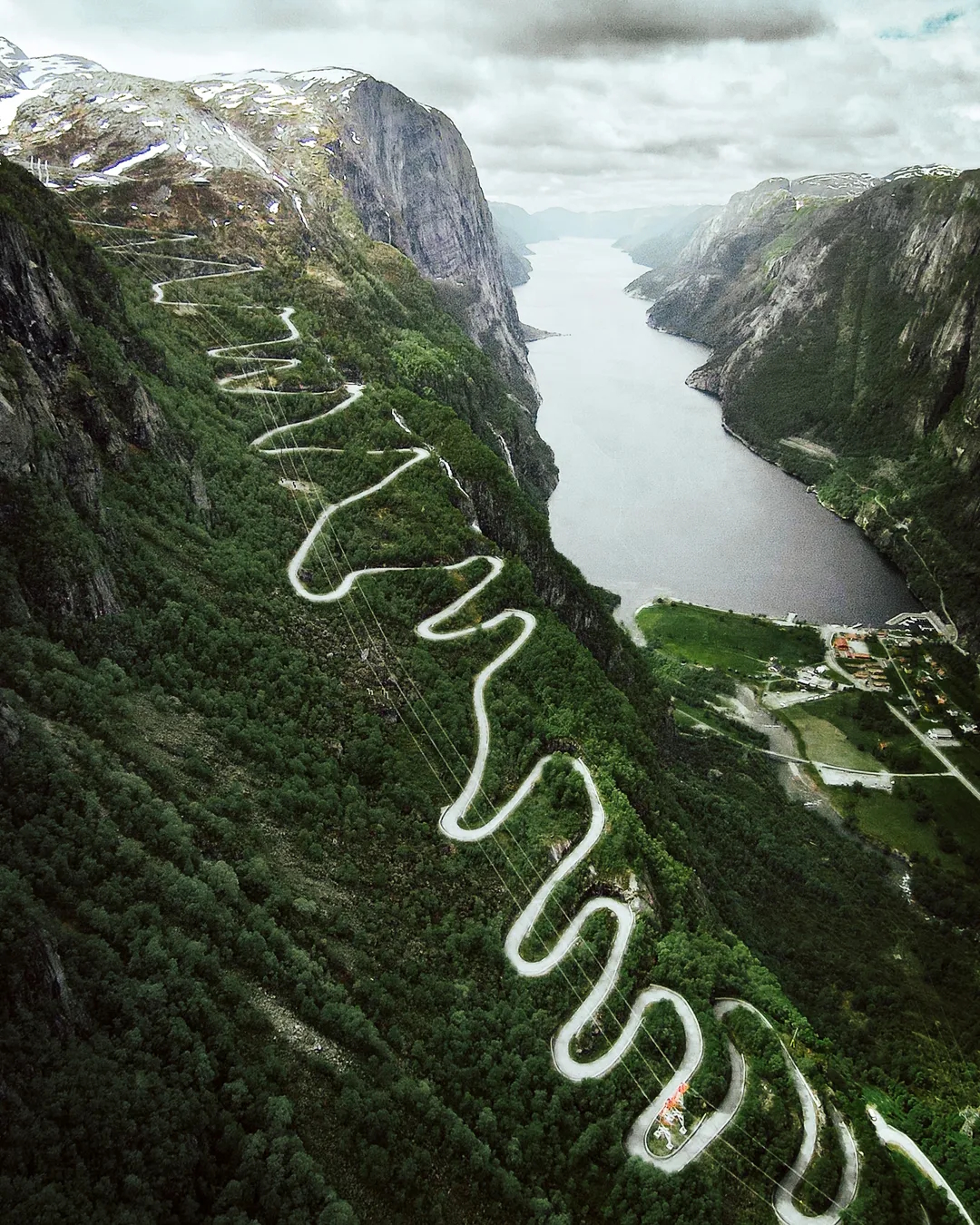
Day 8 is the tour’s most demanding riding day, and the one that riders who have done the tour tend to describe first when asked about Norway. The day begins with a ferry up the Lysefjord from Stavanger — a two-hour passage along one of Norway’s most dramatic fjords, with the Preikestolen cliff visible high on the northern wall and the fjord narrowing as the ferry moves inland. At Lysebotn, the fjord ends and the Lysevegen begins.
The Lysevegen climbs 900 meters in 27 numbered hairpins to the plateau above. The gradient on the steepest sections is 12%. The inside of several hairpins brushes the rock face; the outside of several has minimal protection between the tarmac and the drop to the fjord below. The U-shaped tunnel near the top — a tunnel that doubles back on itself inside the mountain to gain altitude without increasing the external gradient — is unusual enough that riders who have done technical roads all over Europe stop to think about it afterward. At the summit, the plateau opens up in every direction: the Lysefjord far below to the west, open moorland to the east, Stavanger visible on a clear day to the south.
The road back to Dalen for the overnight uses a different route — quieter roads through the interior, an appropriate decompression after a day that is, in every sense, the high point of the tour. The Dalen Hotel, the overnight stop, is a historic property at the end of the Telemark Canal, and it is the kind of place that is worth arriving at slowly.
The Return to Oslo — Day 9
Day 9 rides north and east from Dalen back toward Oslo. The route includes a stop at the Silver Mines in Kongsberg — a historic silver mining complex with an electric train ride deep into the mountain — which provides the kind of cultural stop that Blue Strada builds into the tour for riders who have been on the road for nine days and welcome a reason to get off the motorcycle for an hour. The Silver Mines are genuinely interesting: 300 years of mining history, a train into the mountain, and a temperature inside the mine that is a marked contrast to the surface. It is not a mandatory stop, but it is the right one for this point in the tour.
The final overnight in Oslo is Day 9; departure is Day 10. The welcome dinner on Day 0 and the departure on Day 10 bookend a route that covers 1,700 kilometers of Norwegian tarmac over seven touring days — which works out to roughly 240 kilometers per touring day, a pace that is comfortable without being slow and that leaves time for stops, ferry crossings, and the kind of standing-at-the-edge-of-the-pass moment that is the whole point of riding in Norway in the first place.
What Blue Strada Provides — and What You Bring
The tour price includes the motorcycle with luggage cases, the tour leader and sweeper, 10 nights of accommodation, all breakfasts and dinners, a support vehicle for luggage, fuel and highway tolls throughout, airport-to-hotel transfer on arrival, and commemorative tour apparel. It does not include flights, lunches, adult beverages, or the final transfer to Oslo Airport on departure day.
The motorcycle options are confirmed at booking, subject to availability. Blue Strada selects models suited to the route — this is a road tour with mountain passes, ferry crossings, and varied surfaces, not an off-road or adventure tour, and the motorcycle choices reflect that. If you have questions about which model fits your riding style or dimensions, the booking team will work through it with you.
Blue Strada tours are sometimes described as foodie tours that happen to involve great riding — and Norway doesn’t argue against that reputation. Bergen and Stavanger both have serious food cultures, and the overnight stops on this tour are chosen with the dinner as much as the distance in mind.
The tour format follows the Blue Strada standard: an English-speaking tour leader at the front, a sweeper at the rear, and the option to ride with the sport group or the touring group depending on preference and energy level on any given day. The format is covered in more detail on the main tour page.
For a detailed look at the individual roads — Trollstigen, Sognefjellet, the Lysevegen, and the island coast — see The Best Motorcycle Roads in Norway, which covers each route with the detail that a spotlight post like this one can’t accommodate in full.
Book the Norwegian Fjords Motorcycle Tour
Oslo to Oslo. Trollstigen, Sognefjellet, the Lysevegen, Bergen, Stavanger — 1,700 km, 10 nights, everything included except flights and lunches. Check the tour page for current dates and availability.
View the Norwegian Fjords Motorcycle Tour →
No Responses