
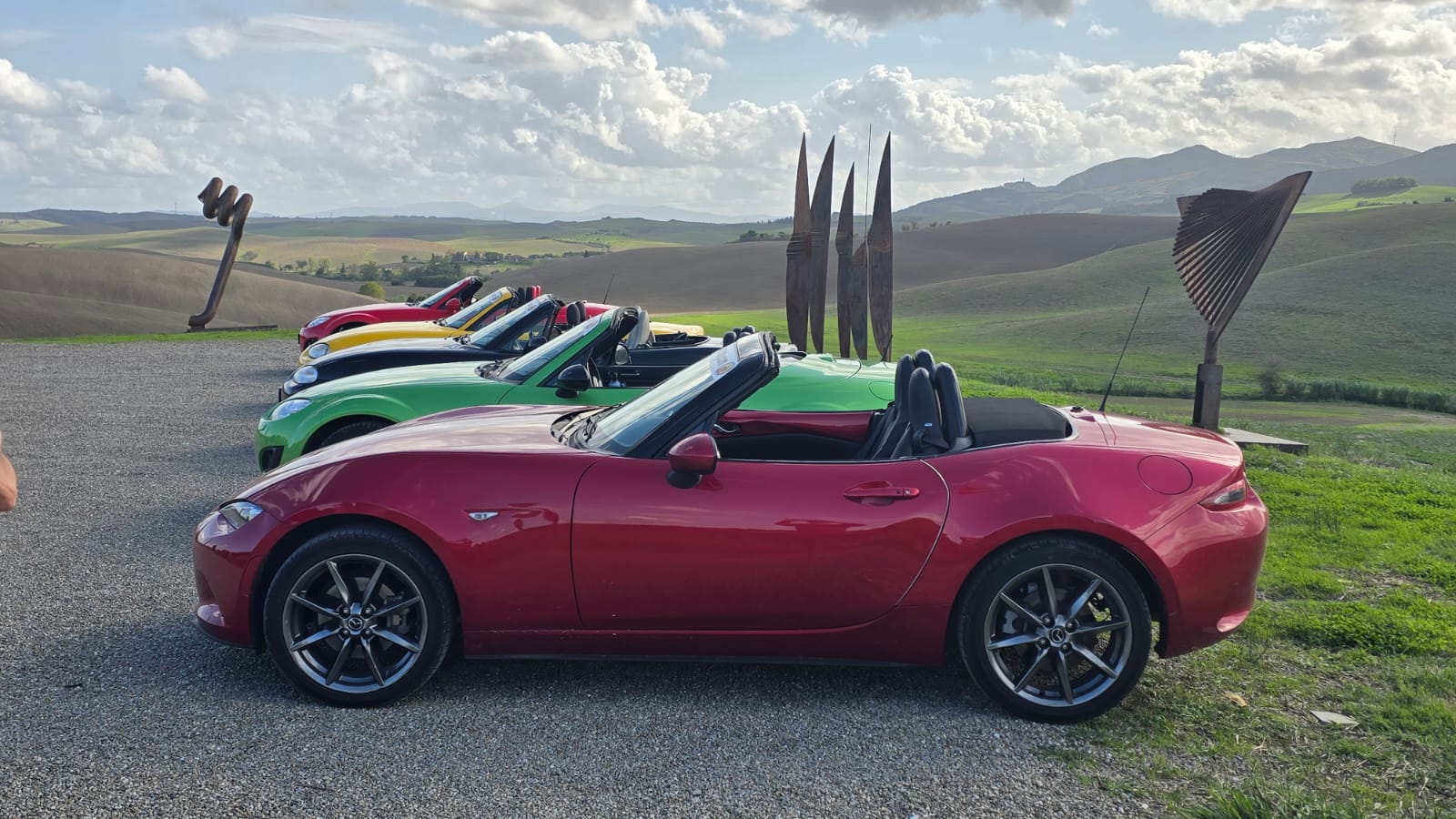
NA vs NB vs NC vs ND: Which Miata Generation Is Right for You?
Few cars have earned the kind of devoted following that the Mazda MX-5 Miata commands. Since its debut in 1989, it has gone through four distinct generations — each one refining the formula while keeping the core promise intact: a lightweight, front-engine, rear-wheel-drive roadster that puts driving enjoyment above everything else.
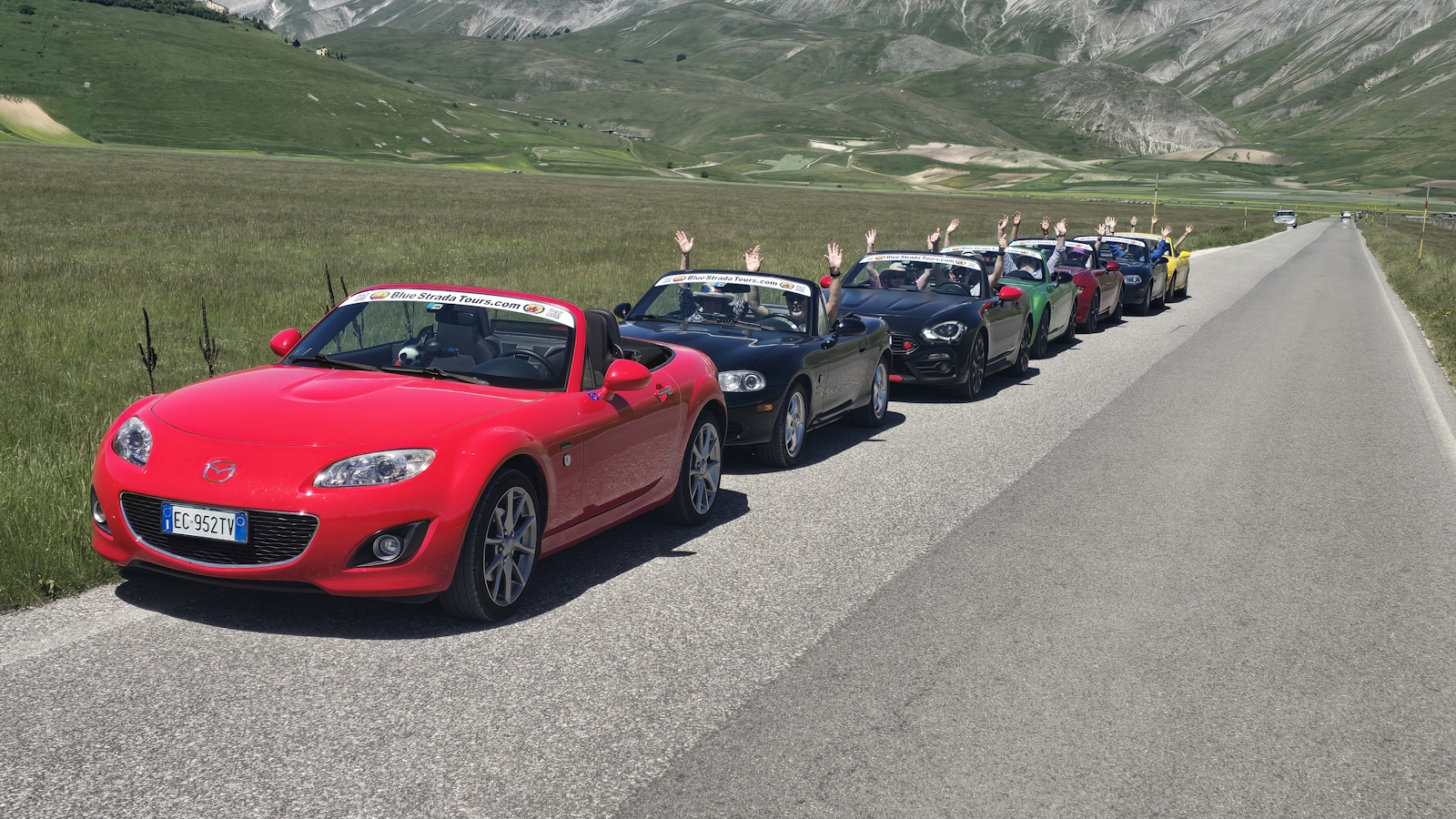
The internet is full of takes on which generation is best. Most are written by people who have driven one, maybe two generations, and formed strong opinions from that. We have a different problem: we own ten Miatas, nine driven on tour, spanning all four generations, and our guests drive them back-to-back on the same European mountain roads. The conversations over dinner on tour are a different kind of debate entirely.
Here’s what years of watching drivers go through every generation — on the same passes, the same towns, the same asphalt — has taught us.
The NA — The Original
Our car: Tia, 1991 — registered in the USA
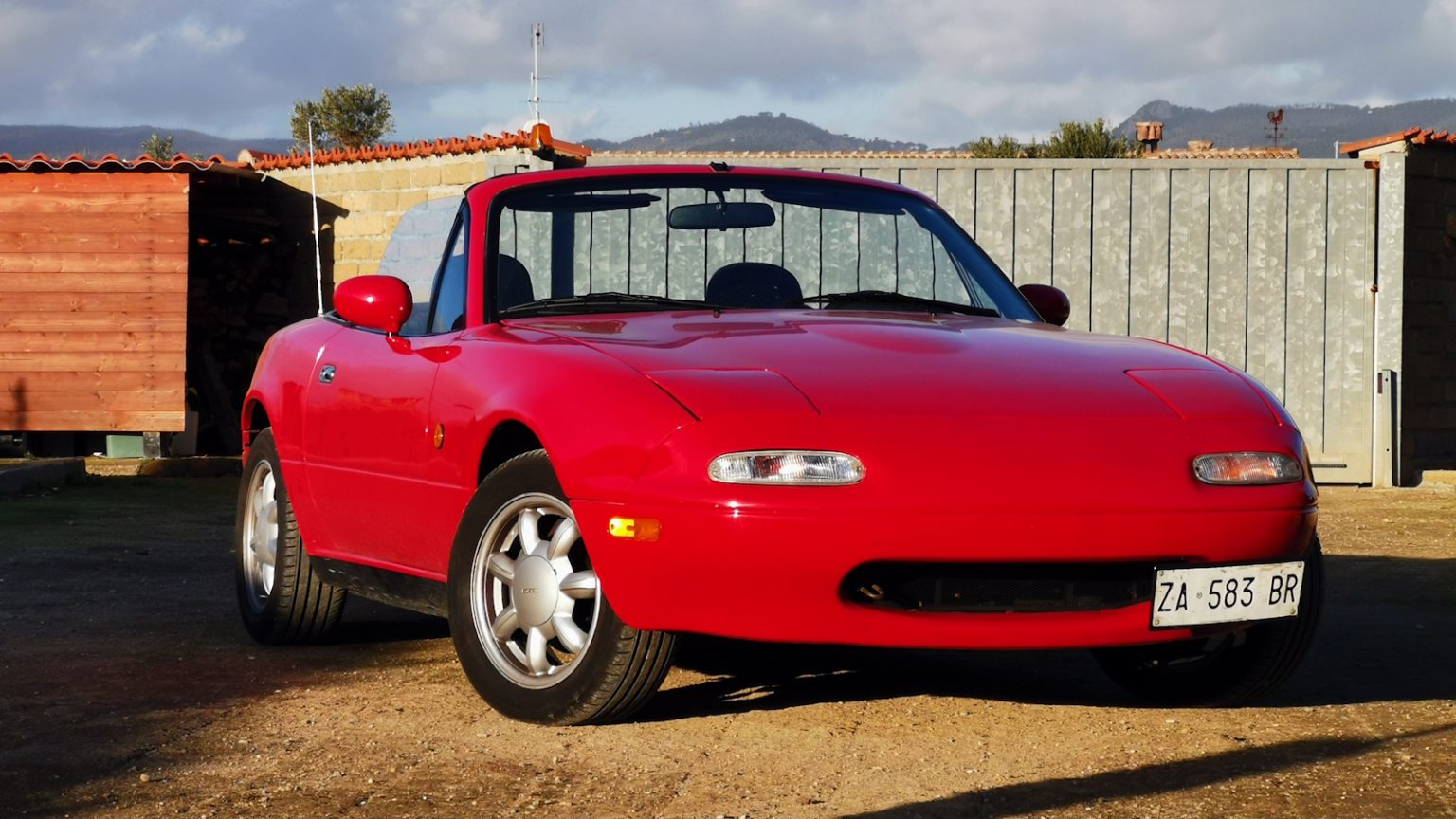
The car that started it all. When Mazda introduced the NA in 1989, it revived a segment the British sports car industry had abandoned — the simple, affordable, open-top two-seater. It succeeded beyond anyone’s expectations, and it hasn’t stopped succeeding since.
Tia weighs around 950 kg — just over 2,000 lbs. That number sounds abstract until you drive her on a twisting Italian hillside road and realize the steering is telling you things no modern car would bother to mention. The 1.6L engine produces a modest 115 HP, but in a car this light, modest is plenty. You’re always in the right gear, always at the limit of grip in a completely manageable way, always smiling.
What the NA lacks in outright power and modern conveniences it more than makes up for in purity. This is the generation that purists point to, and after a day behind the wheel you understand why. Drive Tia first on a tour and everything else feels like progress — which, depending on your temperament, is either a good thing or a shame.
The Bilstein shocks give Tia an edge over a stock NA — composed without being harsh, and that confidence lets you push into corners you’d otherwise approach more cautiously.
Drivers who want the most raw, communicative experience. Those who believe less is more — and want proof of it on a mountain road.
The NB — Evolution, Not Revolution
Our cars: Sapphire (1999, 10th Anniversary), Limoncella (2000, Club 200), Onyx (2003, Trilogy Edition)
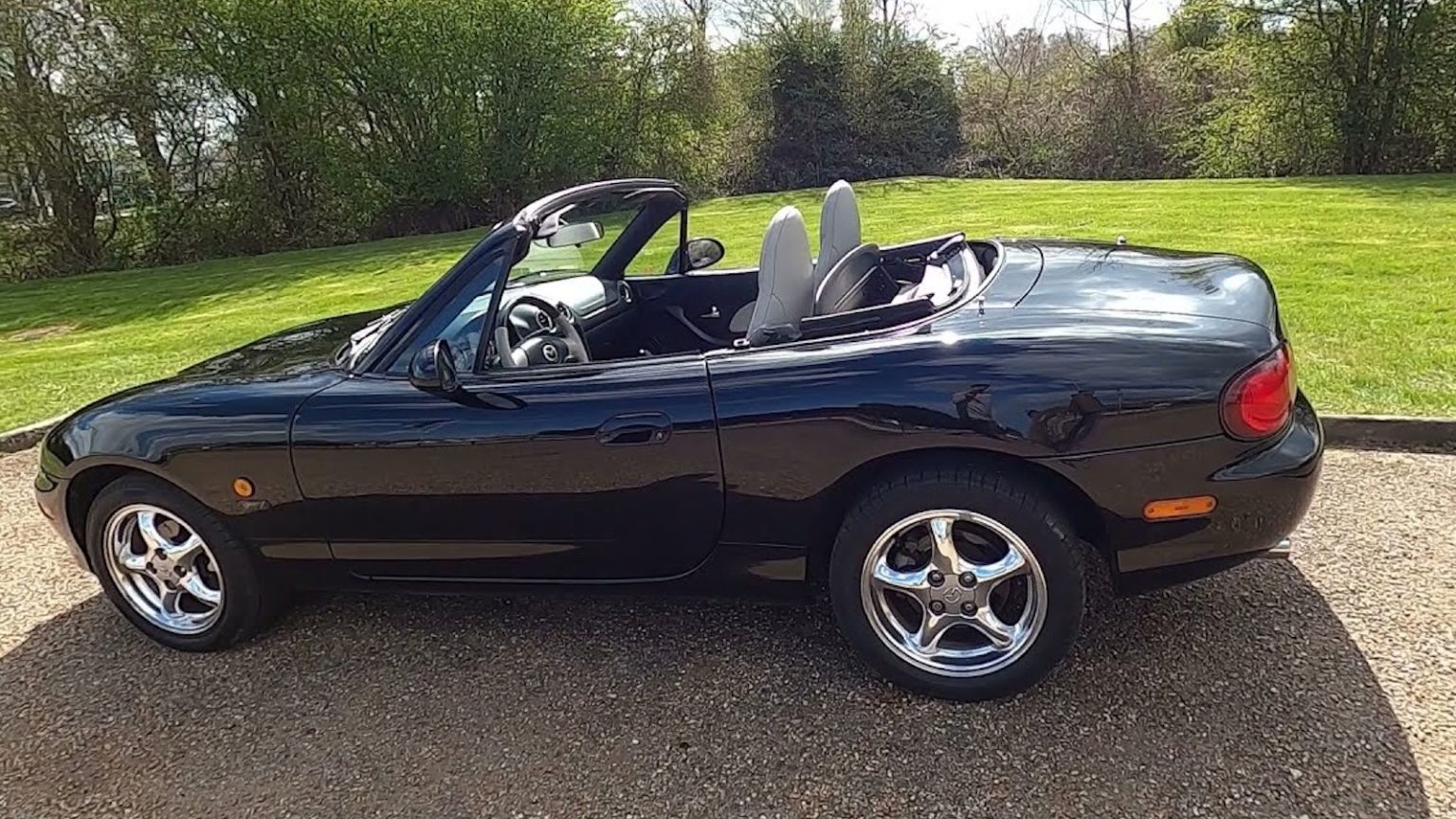
The NB is the generation that divides opinion most sharply in Miata circles. From the outside, the main visible change was the replacement of the NA’s beloved pop-up headlights with fixed units. Miata fans mourned. But underneath, Mazda made meaningful improvements — and in the right variant, the NB is the most rewarding driver’s car in the entire lineup.
Sapphire is a 10th Anniversary edition — one of the most sought-after NB variants ever produced, limited to 7,500 units globally. With a 6-speed gearbox and a limited-slip differential, the experience on a twisty descent is transformed. You can trail-brake into a corner, feel the rear rotate just slightly, and carry more speed than the NA allows. The 1.8L engine pulls more strongly through the mid-range, and the cabin is noticeably more refined.
On tour, Sapphire is often the car guests are most surprised by. They expect NA nostalgia or ND modernity. What they get is a finely balanced machine that rewards a driver who knows what they’re doing.
Drivers who want the classic Miata feel with genuine mechanical sophistication. Heel-and-toe enthusiasts. Anyone who suspects the NB never got the credit it deserved — they’re right.
The NC — The Grand Tourer
Our cars: Rossella (2010, 20th Anniversary), Fiona (2011, Karai Edition PRHT)
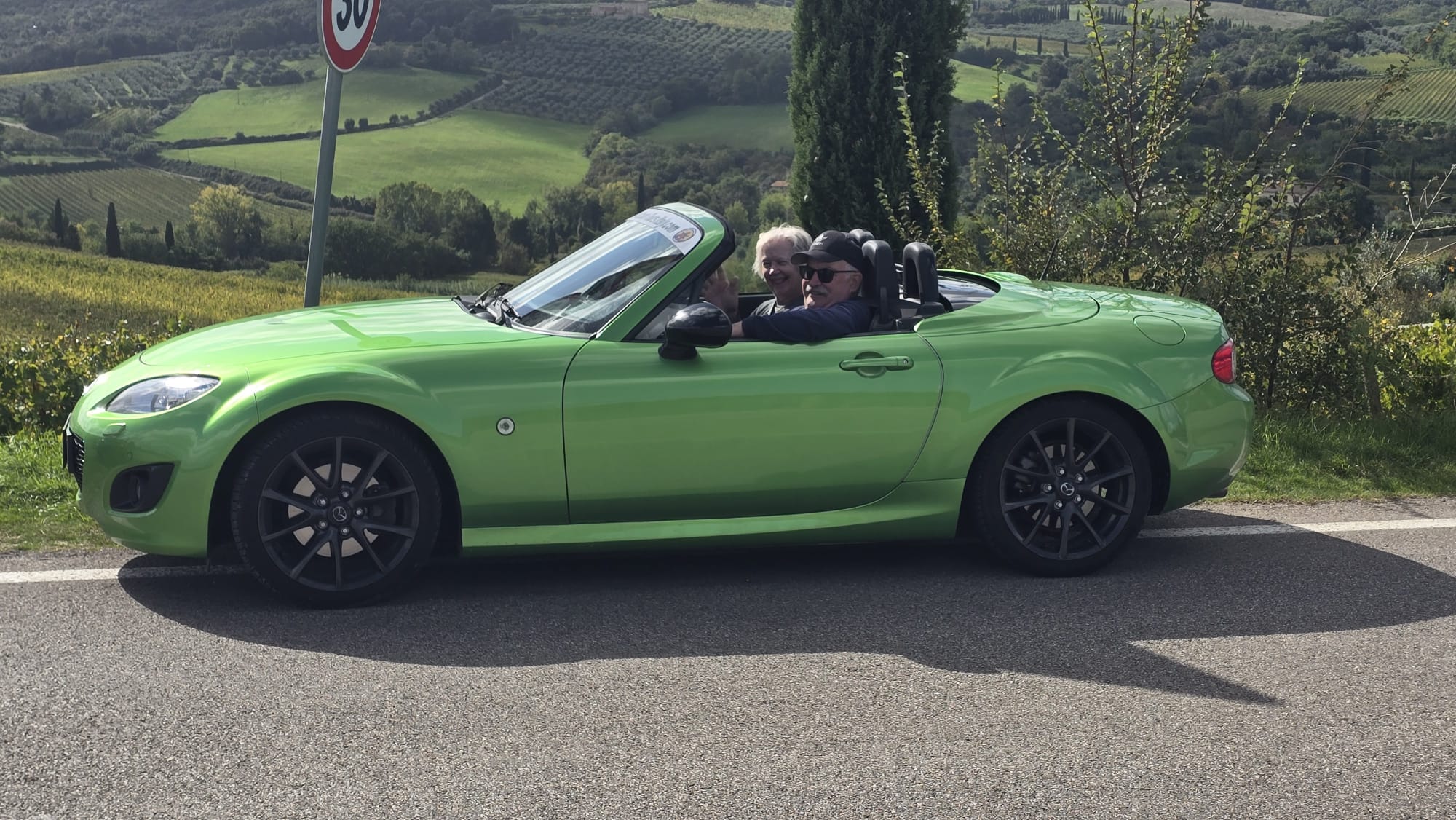
The NC is the generation the Miata community loves to call “the boat” — it’s heavier, longer, and more comfortable than its predecessors, and purists have never quite forgiven it for that. The criticism isn’t entirely unfair. But it misses something important: the NC is the most capable long-distance touring car of the four generations, and that’s exactly why it earns its place in a touring fleet.
It’s worth keeping perspective, though. The NC is larger than an NA or NB, yes — but it’s still smaller than virtually every other roadster on the market. If you’re a taller driver who’s been squeezing into NA cockpits for years, the NC feels like vindication. There’s also meaningfully more room for luggage, which is a practical reality most reviews skip over.
Rossella, our 20th Anniversary edition (one of 2,000 produced), sits noticeably higher on the comfort scale than Tia or Sapphire. Wind noise is lower, the seats are more supportive over long days, and the suspension absorbs the kind of broken Italian asphalt that would have the NA chattering your fillings loose.
Fiona is a different animal entirely — the rare Karai edition PRHT (Power Retractable Hardtop), one of only 165 produced, with a 2.0L engine and 6-speed gearbox. Many NC owners argue the PRHT is a more satisfying roof than the ND’s RF variant, which introduces more wind noise when open than a standard soft top. Drive Rossella and Fiona back-to-back and you’re comparing two genuinely distinct philosophies within the same generation.
Taller drivers. Longer tours. Anyone who needs to carry more than a backpack. And anyone curious about the PRHT roof debate — Fiona answers that definitively.
The ND — Back to the Roots, but Better
Our cars: Scarlett (2016 Exceed), Bianca (2017 ND RF), Swift (Yamamoto Signature Edition — one of only four ever made)

Mazda heard the feedback about the NC’s weight gain and responded decisively. The ND returned to the lightweight philosophy of the original while adding everything the modern driver expects: Skyactiv technology, a dramatically stiffer chassis, improved safety equipment, and a beautifully resolved interior.
Scarlett is the most polished and technically accomplished Miata in our fleet — and one of its quickest. The 2.0L Skyactiv engine is rev-happy and smooth, the 6-speed gearbox has the best action of the four generations, and the chassis communicates the road surface with a clarity that the NC couldn’t match. Comfortable enough to drive all day, engaging enough that you won’t want to stop.
Guests who spend a morning in Tia and an afternoon in Scarlett often describe the ND as driving the same idea with 30 years of refinement. Which is more or less exactly what it is. Bianca — our ND RF with the power retractable fastback roof — adds a wildcard: architecturally distinct from any Miata that came before it, yet sharing every mechanical virtue of the ND platform underneath.
Drivers who want the complete package — modern safety, best-in-class performance, and that essential Miata character fully intact. The car most guests go home wanting to buy.
There Is No Other Way to Do This
in one fleet
driven on tour
generation.
You can read about the differences between Miata generations on any forum. But very few places in the world let you drive all four back-to-back — on the same mountain pass, in the same week, with the same corner as your reference point.
Owning a single generation tells you what your car is like. Driving all four on the same road tells you what each generation means — what Mazda chose to prioritize, what they gave up, and what they ultimately got right across 35 years of iteration. The NA’s purity hits differently after an afternoon in the ND. The ND’s sophistication means something only after a morning in the NA.
That context is impossible to get from a review, a forum post, or a back-to-back test at a dealership. You get it from a week on European mountain roads with all four generations in the rotation.
“By the end of the week, you’ll have formed a very strong personal opinion about which generation suits you best. And you’ll have earned it.”
Ready to Drive All Four?
Our Miata driving tours through Europe put you in every generation — on the roads that show you what each one is really capable of.
View Miata Driving Tours →
No Responses