
Best Roads in Ireland: The Antrim Coast, Giant’s Causeway & Wicklow Mountains
Coastal cliffs, ancient basalt columns, and mountain passes that empty out at both ends — Ireland rewards drivers and riders who look past the obvious.
Ireland on the Road
Ireland has a reputation for scenery and a less-remarked one for roads. The island is small enough that a 12-day tour can touch its most dramatic corners without rushing, yet varied enough that no two days feel alike. The northeast — Northern Ireland and the Antrim Coast — delivers raw coastal drama. The south offers mountain passes and monastic ruins set in deep green valleys. Both reward the kind of unhurried travel that a guided tour allows.
Traffic is light outside Dublin, the roads are almost entirely asphalt, and the locals are genuinely welcoming to touring visitors. It is not an easy destination to explore badly.
The Antrim Coast Road: One of Europe’s Great Coastal Rides
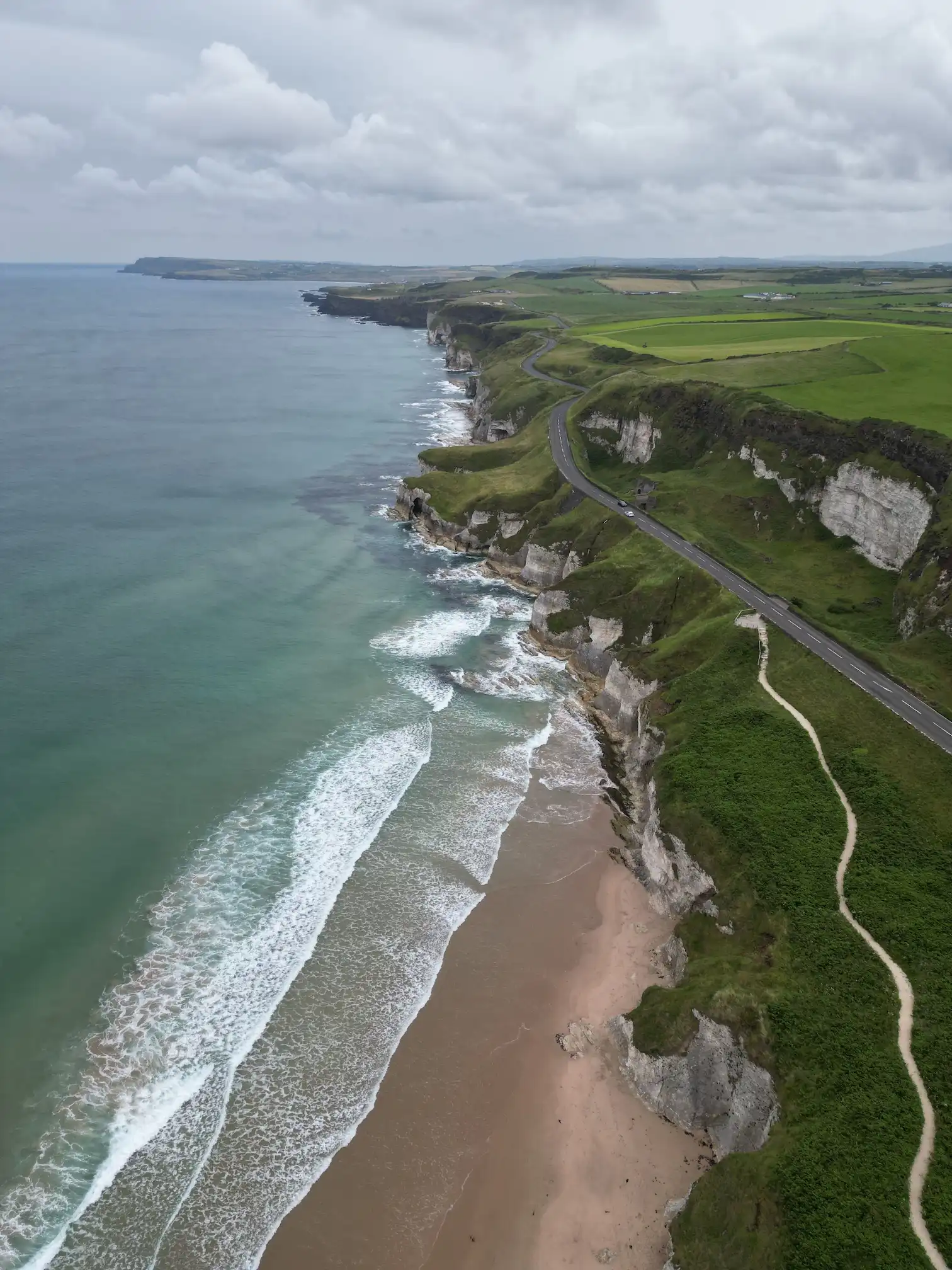
The A2 from Larne to Portrush — the Antrim Coast Road — runs for around 60 miles along the northeastern edge of Northern Ireland, with the North Channel on one side and basalt cliffs on the other. It is one of the earliest scenic coastal roads in the world, built in the 1830s to connect communities that were previously accessible only by sea.
The road moves through a succession of small towns and viewpoints: Carnlough, Cushendall, Ballycastle, and Portrush, with the ruins of Dunluce Castle perched on a cliff above the sea near the end of the run. The pace is easy and the views justify stopping at almost every layby. Plan a full day for the full stretch rather than trying to cover it quickly.
“The Antrim Coast Road runs for around 60 miles along the northeastern edge of Northern Ireland — one of the earliest scenic coastal roads in the world, built in the 1830s to connect communities that were previously accessible only by sea.”
Giant’s Causeway
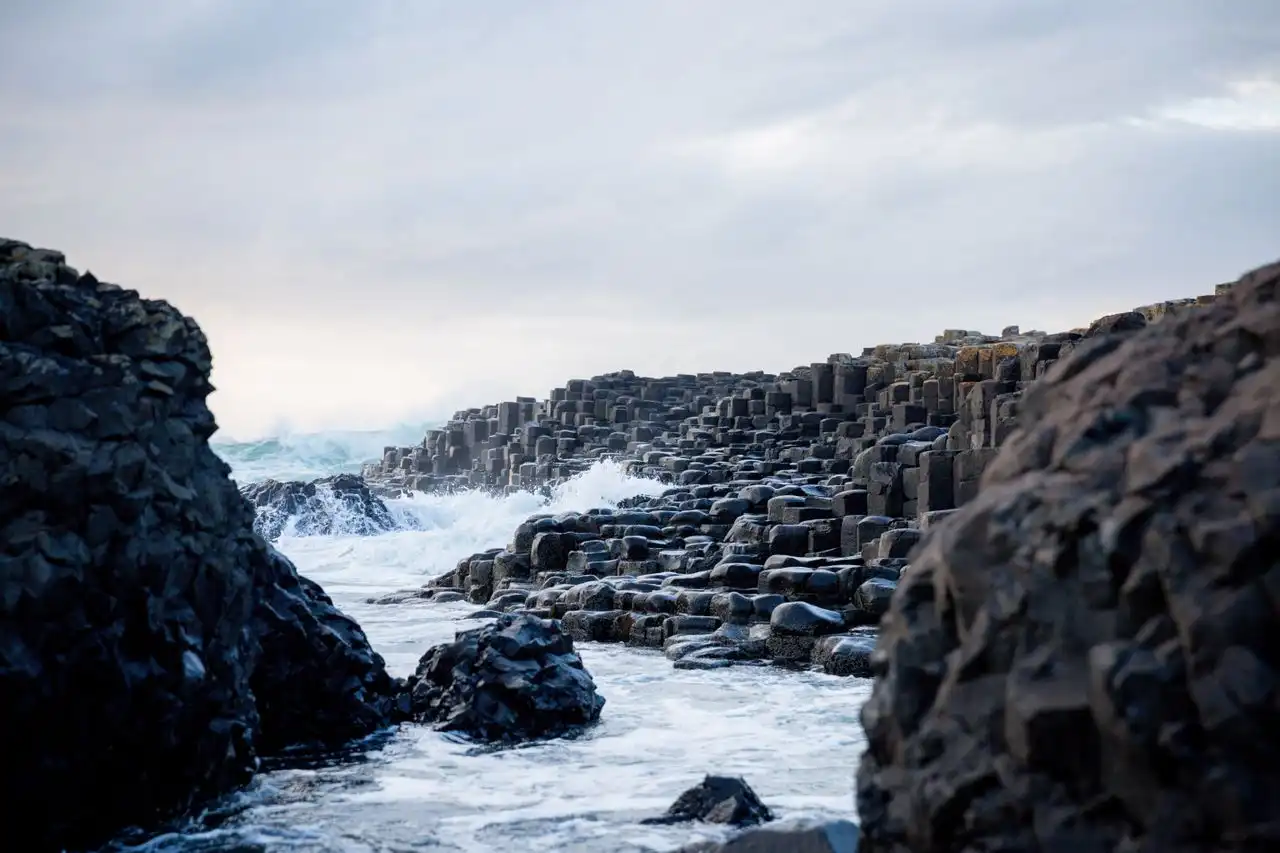
The Giant’s Causeway sits partway along the Antrim Coast, just west of Bushmills. Around 40,000 interlocking basalt columns — formed by an ancient volcanic eruption and shaped by cooling into near-perfect hexagons — extend from the cliff base into the sea. The geology is extraordinary and the walk down to the stones is free; the visitor center is optional.
It is worth arriving early or late in the day to avoid the worst of the coach tour crowds. On a weekday morning the site can feel almost deserted, which makes the scale of it properly land.
The Wicklow Mountains: Dublin’s Backyard

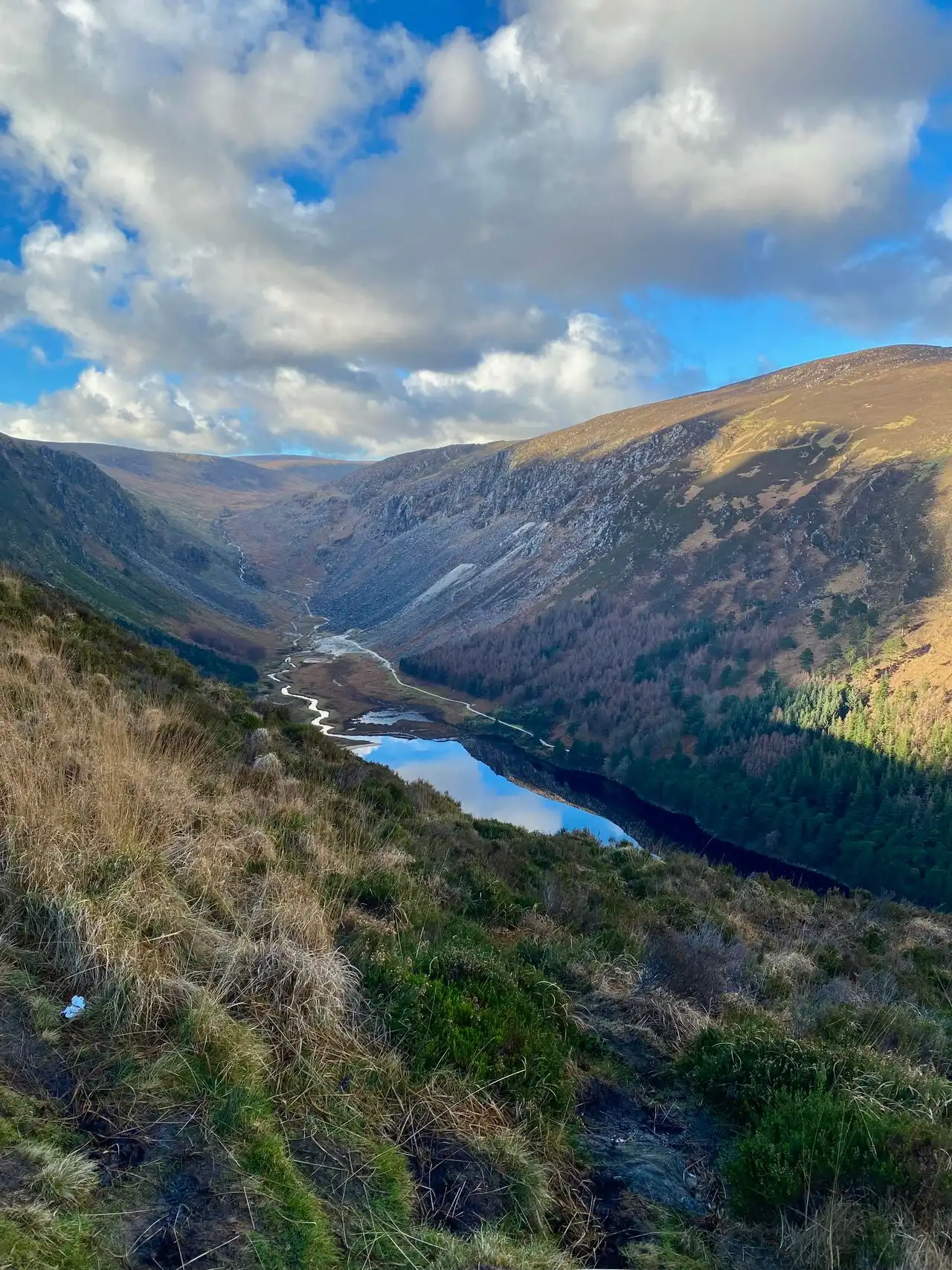
Forty minutes south of Dublin city center, the Wicklow Mountains rise steeply enough to feel genuinely remote. The Military Road — built after the 1798 rebellion to give the British Army access to rebel strongholds in the hills — runs the full length of the mountains from Rathfarnham to Aghavannagh, passing through some of the most desolate and beautiful upland scenery in Ireland.
The two key stops are Sally Gap and Glendalough. Sally Gap is a high, exposed crossroads where four mountain roads meet, with views across blanket bog toward the Sugar Loaf and the sea. Glendalough — Gaelic for “Valley of the Two Lakes” — holds a remarkably intact sixth-century monastic settlement tucked into a glacial valley, with round towers and stone churches that have survived largely intact for 1,500 years.
The loop from Dublin through Sally Gap, down to Glendalough, and back via Enniskerry and the N11 covers around 80 miles and makes an excellent first or last day’s riding.
Beyond the Antrim Coast and Wicklow
Ireland has more to offer than these two regions, though the northwest and southwest require more time to do properly. The Conor Pass on the Dingle Peninsula in County Kerry is Ireland’s highest mountain pass and bans caravans and large vehicles — a de facto motorcycle road with a 1,500-foot summit and sea views in three directions. The Ring of Kerry is busier but delivers the full west coast experience: Atlantic inlets, stone-walled fields, and the kind of late-afternoon light that makes every photograph look considered.
For riders based in Dublin who have an extra day, the coast road south to Wexford through Wicklow town and Arklow moves quickly and delivers sea views without the mountain climbing.
Practical Notes
Northern Ireland uses the British pound; the Republic of Ireland uses the euro. The currency changes at the border, which is otherwise invisible on the road. Most ATMs accept international cards without issue.
The weather is famously unpredictable. Rain gear is non-negotiable, but Irish rain tends to come in squalls rather than all-day downpours, and a wet morning frequently clears by midday. The light in the late afternoon — especially in the west — is worth waiting for.
Notes for Motorcyclists
Ireland is one of the more forgiving destinations for motorcycles — roads are predominantly asphalt, gradients are gentler than the Scottish Highlands, and rural traffic is light. A few things to keep in mind: the Antrim Coast Road is a designated tourist route and attracts coaches and campervans in summer, so early morning is the best time to run it cleanly. The Wicklow Military Road is narrow and can have loose surface material after rain, particularly near Sally Gap.
The Conor Pass on the Dingle Peninsula bans caravans and large vehicles, which makes it one of the best roads in the country for a focused driving or riding day — but the summit can be in cloud even when the valleys below are clear, and the descent toward Dingle is steep with tight switchbacks. Take it at a pace that lets you enjoy the views rather than manage the corners.
Fuel is readily available along the Antrim Coast and in the Wicklow area given their proximity to Belfast and Dublin. The west of Ireland is more sparse — fill up in Westport, Galway, or Killarney before heading into the more remote sections.
Blue Strada Tours’ Classic TT & Highlands tour opens and closes in Dublin, riding the Antrim Coast Road and Giant’s Causeway in both directions as part of a 12-night loop through Ireland, Scotland, the Lake District, and the Isle of Man.
See the Classic TT & Highlands Tour
No Responses